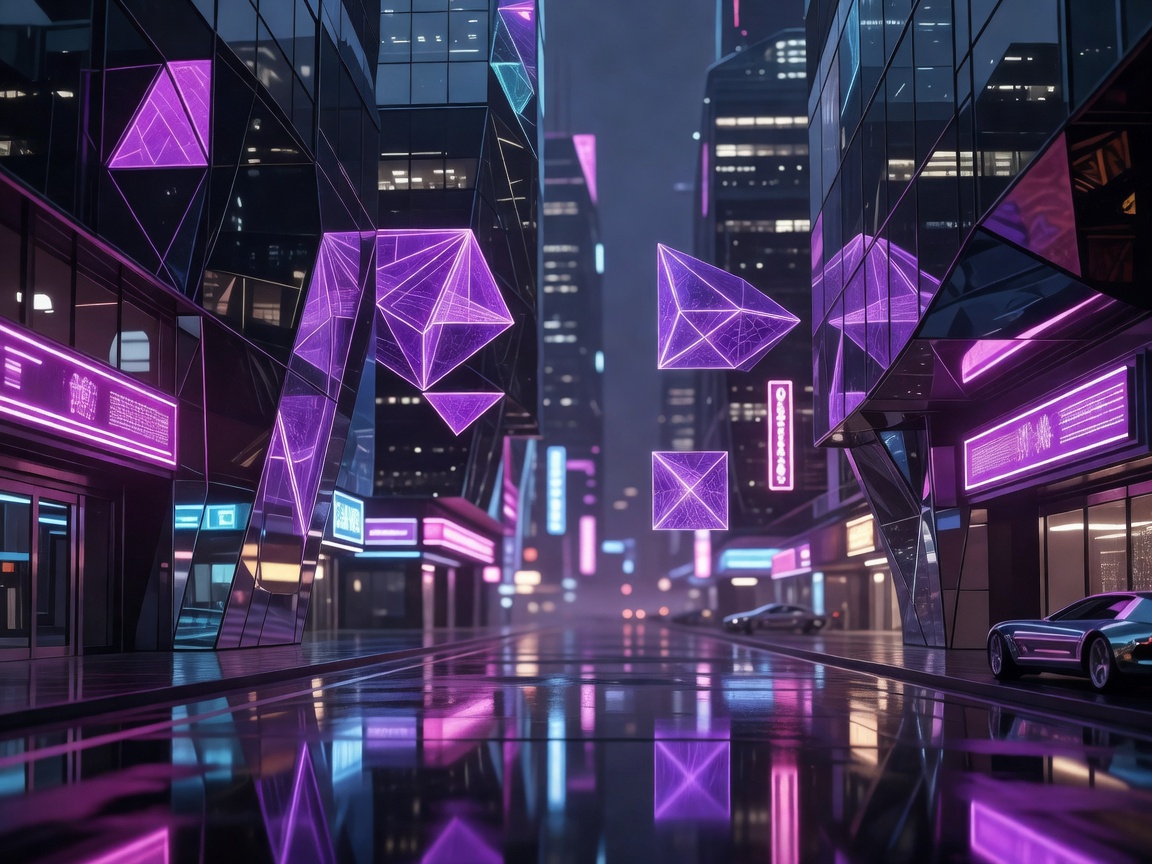
The core principles of 20th-century Swiss Modernism—mathematical grid alignment, objective legibility, structural minimalism, and purposeful negative space—have emerged as the ideal framework for curating 21st-century synthetic visual art.
1. Order Amidst Algorithmic Complexity
Generative diffusion models naturally generate infinite detail and dense visual noise. Without strict structural discipline in gallery layout, high-dimensional artworks can easily overwhelm the viewer. Applying Swiss grid standards provides clarity and brings focus to subtle chromatic details.
"Swiss design principles serve as a architectural frame for artificial intelligence, organizing complex mathematical latent spaces into structured human experiences."
2. High-Contrast Dark Mode & Glassmorphism
In Zurich digital spaces, high-contrast obsidian backgrounds paired with glowing cyan and holographic pink accents allow emission shaders to pop off the screen. Glassmorphic overlays create visual depth while maintaining grid alignment across all screen resolutions.
3. Typography as Spatial Anchor
Pairing geometric display typefaces like Space Grotesk with neutral sans-serif body fonts like Inter enforces visual hierarchy. Clean typography allows artwork metadata, generation parameters, and curatorial commentary to complement the generative imagery without distraction.